
Case Study:
Industrial Automation Solutions
Automated Product Changeovers for Building Product Manufacturing
Objective
- Automate product changeovers on a building product manufacturing line.
Solutions
- Implemented three servo-axis motors to automate two pin stop pantographs and one slitter knife pantograph.
- Updated drive firmware to support communication with the existing PLC platform.
- Programmed automated pantograph and solenoid adjustments using live recipe data.
- Integrated distributed I/O and servo controls into the existing production line automation system.
- Maintained onsite engineering support throughout commissioning and startup to minimize production disruption.
Results and Benefits
- Reduced downtime associated with product changeovers on the manufacturing line.
- Eliminated manual pantograph adjustments and operator intervention during product transitions.
- Enabled automatic machine adjustments for varying product lengths and widths using recipe-based control.
- Improved production line automation and operational consistency across multiple product runs.
- Minimized startup risk and production interruption through continuous onsite engineering support.
Background
A building product manufacturer needed to reduce line downtime caused by manual product changeovers on an active production line. Existing changeover procedures required operators to lock out electrical and pneumatic systems before entering the machine zone. Operators then manually repositioned pantographs based on product dimensions. This process increased downtime, interrupted production flow, and created operational inefficiencies during product transitions.
The existing control architecture transferred recipe data between machine zones. However, the system could not automatically adjust downstream equipment when product dimensions changed. The manufacturer also required that the upgrade be completed within a strict shutdown window to minimize lost production time.
Quad Plus Solution
Quad Plus automated the product changeover process by integrating new servo hardware, distributed I/O, and PLC-driven motion control. The upgrades were integrated into the existing manufacturing system.
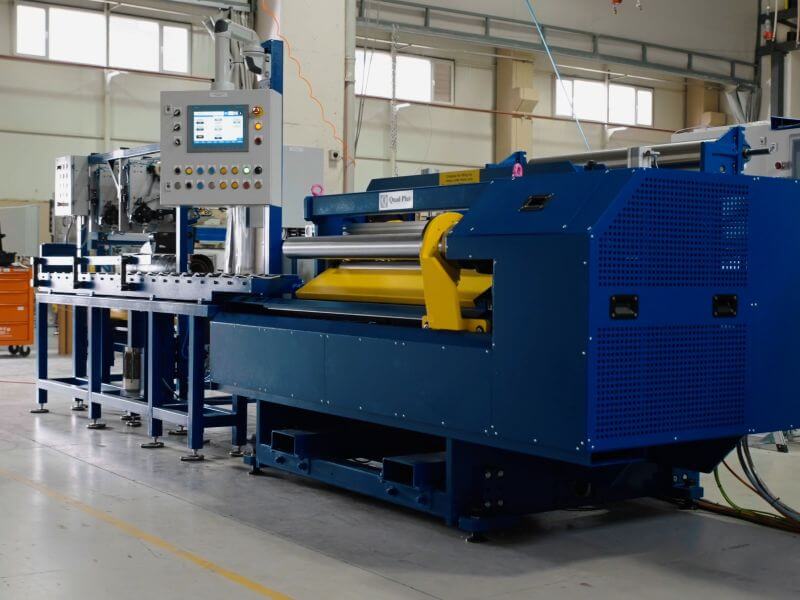
The project included three servo-axis drives controlling two adjustable pin-stop pantographs and one slitter-knife pantograph. Each drive was configured with firmware compatible with the facility’s existing PLC platform. This allowed integration without requiring replacement of the larger control system.
Quad Plus engineers programmed the system to interpret recipe data and automatically adjust pantograph positions. Adjustments were based on active product dimensions as material moved through the line. The PLC continuously monitored board width and positioning data. It then commanded each servo to move to predefined setpoints during production changeovers.
Automatic shutdown logic was also implemented to reduce material waste. If a pantograph failed to reach its required position within the required tolerance or time window, the affected production zone automatically shut down. This prevented defective product movement downstream.
Distributed I/O was integrated to automate the pinstop sequencing process and maintain proper product spacing throughout production. This eliminated the need for manual positioning adjustments during changeovers.
To support the aggressive project timeline, Quad Plus engineers remained onsite throughout commissioning, startup, and production trials. Continuous onsite support minimized downtime during implementation and helped ensure stable operation across multiple product configurations.
The completed system now allows operators to transition between products with the push of a button. Product dimensions automatically adjust through recipe-driven control without manual intervention or extended production interruptions.
Industrial Automation Solutions for Building Products Manufacturers
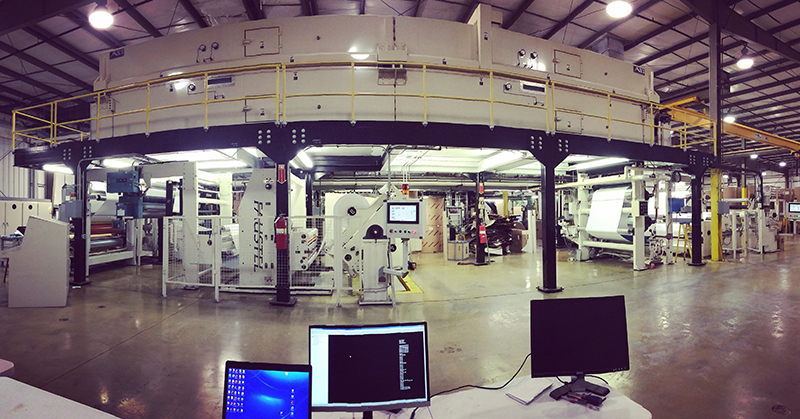
Building product manufacturers depend on reliable automation to maintain production speed, product consistency, and operational efficiency. Manual adjustments and outdated controls often increase downtime during product transitions and create unnecessary production interruptions. Industrial automation solutions improve process consistency across the building product manufacturing line. This is achieved by automating equipment positioning, recipe handling, and machine coordination.
Servo systems, distributed I/O, PLC integration, and automated control logic allow manufacturers to run multiple product sizes more efficiently. These systems also reduce manual intervention during production changeovers. The upgrades help reduce labor requirements, improve repeatability, and support more consistent manufacturing operations across demanding production environments.
How Production Line Automation Drives Manufacturing Efficiency
Production line automation reduces the manual tasks that commonly slow manufacturing operations. Automated positioning systems, servo controls, and recipe-driven adjustments allow equipment to respond quickly to changing product specifications. This reduces the need for extended shutdowns.
This supports manufacturing efficiency improvement by reducing downtime during product changeovers. It also helps maintain a more consistent production flow. Automated systems help minimize material waste by improving positioning accuracy and process repeatability. In building product manufacturing, automation enables facilities to handle varying product dimensions more efficiently, while reducing operator involvement and improving overall production reliability.
PLC Integration and Process Control Optimization in Manufacturing
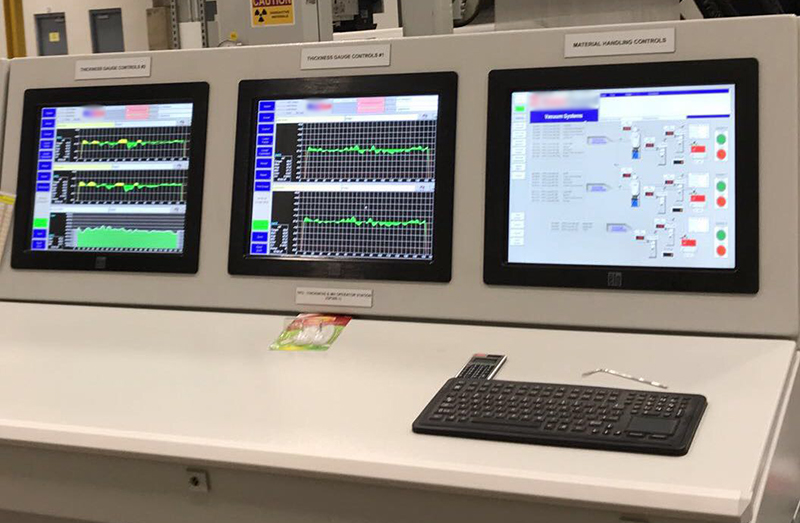
PLC integration allows machine components to communicate within a coordinated control system. In manufacturing environments, PLCs manage recipe handling, servo positioning, distributed I/O communication, and automated machine sequencing. Process control optimization improves production accuracy. Equipment can automatically respond to changing product conditions in real time.
In this project, the PLC interpreted recipe data and adjusted pantograph positions based on the active product’s dimensions as the product moved along the line. Automated shutdown logic also helped reduce product waste by detecting positioning issues before defective material moved downstream.
Control System Modernization for Legacy Production Equipment
Many manufacturing facilities continue operating reliable production equipment that was not originally designed for modern automation systems. Control system modernization allows manufacturers to improve performance without replacing entire production lines. Updating legacy equipment with modern servo drives, distributed I/O, and integrated PLC communication improves automation capabilities and supports drive systems integration. It also helps preserve existing infrastructure investments.
Firmware compatibility is often critical to these upgrades, especially when newer hardware must communicate with older PLC platforms. Properly planned modernization projects improve manufacturing flexibility, reduce downtime, and extend the operational life of existing production equipment.
Solutions for Every Building Product Shingle Manufacturer
Quad Plus specializes in providing customized solutions to meet the unique needs of shingle manufacturers. Our services are designed to improve efficiency, ensure quality control, and optimize production processes.
Quad Plus also provides industrial equipment repair and field service support for existing manufacturing systems and automation equipment.
Contact our team to discuss production line upgrades, modernization projects, and automation improvements.

Frequently Asked Questions
Industrial temperature control systems help maintain consistent material properties throughout shingle production. Stable temperature control improves product quality and supports uniform coating and adhesion. It also reduces material waste and helps prevent production interruptions caused by overheating or inconsistent curing conditions.
Temperature directly affects asphalt viscosity, material consistency, adhesion performance, and final product quality. Poor temperature control can lead to uneven coating application, defective products, increased waste, and reduced production efficiency.
The largest shingle manufacturers improve product durability and performance through automated process control, consistent material handling, precise temperature management, and production-line automation systems designed to maintain repeatable manufacturing conditions in high-volume operations.