
Infrared Electrical Inspections Prevent Catastrophic Failure
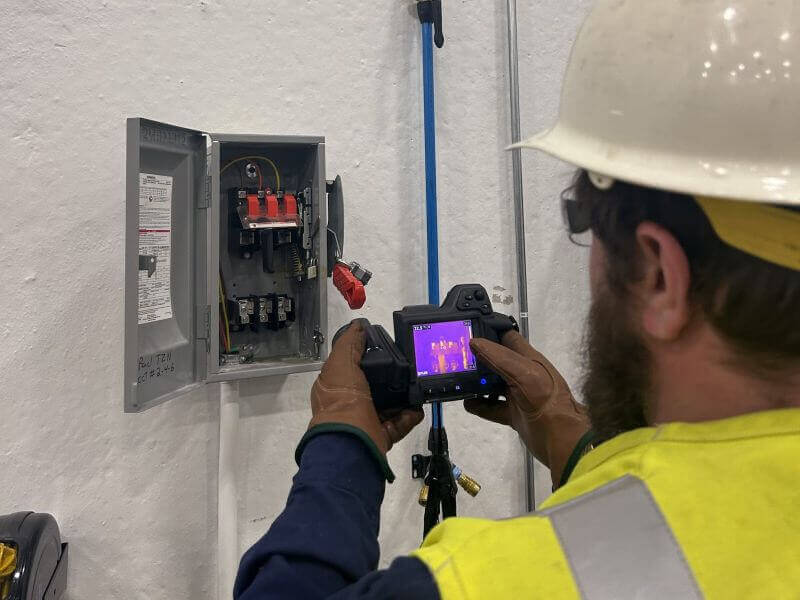
IR electrical inspections detect heat caused by electrical resistance. The cause can be loose connections, overloaded or imbalanced circuits, damaged switches, or faulty breakers and fuses. This excess heat degrades insulation on wiring, bus connections, and cable terminations.
The result is dangerous conditions for your crew and your equipment. Infrared inspections help detect these conditions early.
Your final report documents inspection findings and highlights areas of concern. Typical assets include switchgear, panelboards, motor control centers, transformers, and bus duct.
Don’t wait until your components fail before discovering a problem. Schedule an inspection with our infrared-certified technicians and correct problems now.
The Importance of Infrared Electrical Inspections for Preventing Failures
Failing components jeopardize the safety of your crew and equipment. Skipping your annual electrical IR inspection could result in production downtime. It could also cause damaged equipment, employee injuries, or worse.
Electrical failures often begin with increased resistance at a connection point. As resistance increases, current flow begins to generate heat. Insulation breakdown and contact deterioration are accelerated. Infrared thermography allows technicians to locate these hot spots while the equipment remains energized.
Infrared inspection is one of the most effective diagnostic tools for identifying degrading electrical components. For this reason, your insurance company may have requested an infrared inspection. The goal is to reduce the risk of electrical fires and unplanned outages.
Infrared inspections are also aligned with NFPA 70B recommendations for electrical equipment maintenance. Inspection reports document thermal images and temperature measurements. They also help maintenance teams prioritize corrective action.

Don’t Get Caught By Surprise
Preventive maintenance schedules that include IR inspections help you stay in control of the repair schedule. Thermal scanning identifies developing electrical problems early. Repairs can be planned during scheduled outages instead of emergency shutdowns.
Inspection procedures and documentation also follow NETA thermographic inspection guidelines. These guidelines define best practices for scanning energized electrical equipment. They also cover reporting standards for thermal anomalies.
Infrared inspections detect overheating connections, deteriorating breakers, and overloaded circuits. They give your maintenance team time to evaluate repair options and order replacement components. They also reduce the likelihood of emergency service.
Understanding the Infrared Imaging Process in Electrical Inspections
When an electrical component begins to fail, resistance increases, and heat develops at the point of the fault. Infrared thermography uses a thermal imaging camera. It measures surface temperature differences across energized electrical equipment.
During an infrared electrical inspection, a certified technician scans panels, switchgear, breakers, and bus connections. Other energized components may also be inspected.
Accurate thermal analysis requires equipment to operate under normal load conditions. This allows technicians to properly evaluate temperature differences. The camera detects infrared radiation emitted by heated components. It converts this radiation into a thermal image.
Your inspection report includes thermal images and temperature differential analysis. It also contains recommended corrective actions for any detected anomalies. Technicians can then identify problem areas. These include loose connections, overloaded conductors, deteriorating insulation, and failing contacts. Corrective work can then be planned before a catastrophic failure occurs.
But, My Machines Are All Running Perfectly…
The right time to discover problems is while your equipment is still operating normally. That way, you are in control of when the shutdown happens. Infrared electrical inspection services are performed while systems are energized and under load. Technicians can then detect developing faults that may not appear during shutdown inspections.
A sudden halt to production isn’t good for the machinery, your crews, your customers, or your bottom line. Once overheating begins, failure is only a matter of time.
Infrared inspections give you the time needed to evaluate repair options. You can schedule corrective work on your terms. Best of all, inspections are performed by certified technicians without requiring production downtime.
Common Electrical Issues Identified Through Infrared Inspections
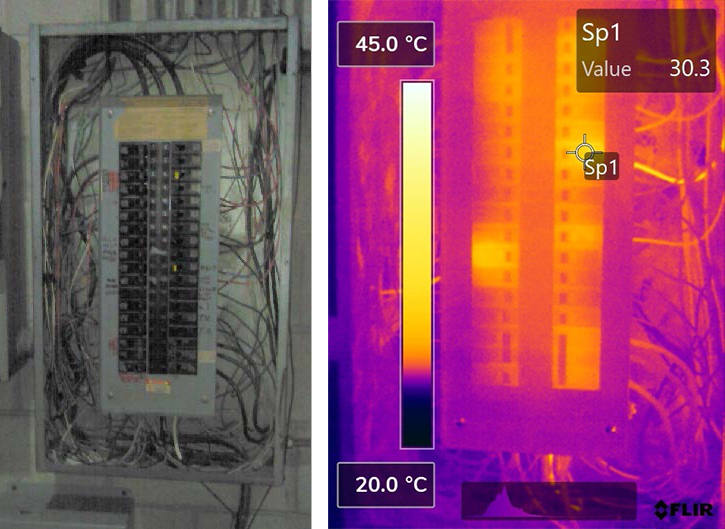
Infrared electrical inspections help detect abnormal heat patterns. These patterns often indicate developing electrical problems. Many appear long before visible damage or equipment failure occurs.
Thermal anomalies are commonly found at cable terminations, bus connections, or breaker contacts. Other high-current connection points can also develop overheating conditions. Common issues detected during infrared electrical inspection services include:
Detecting these conditions early allows you to correct them before they cause safety hazards or downtime.
Infrared Electrical Inspections vs. Traditional Methods
Traditional electrical inspections rely on visual checks, manual testing, or scheduled shutdowns. These methods are important maintenance steps. However, they cannot always detect early-stage electrical faults that develop during normal operation. Many electrical faults develop internally within connections or contacts. These faults cannot be detected through visual inspection alone.
IR electrical inspections provide an additional diagnostic layer. Thermal imaging identifies heat patterns in energized equipment. This allows technicians to locate abnormal conditions without interrupting production. Overheating often appears before visible damage occurs. Thermal scans can reveal problems earlier than standard inspection methods.
This approach helps maintenance teams prioritize repairs and reduce the likelihood of sudden equipment failure.
How Infrared Electrical Inspections Detect Overloaded Circuits
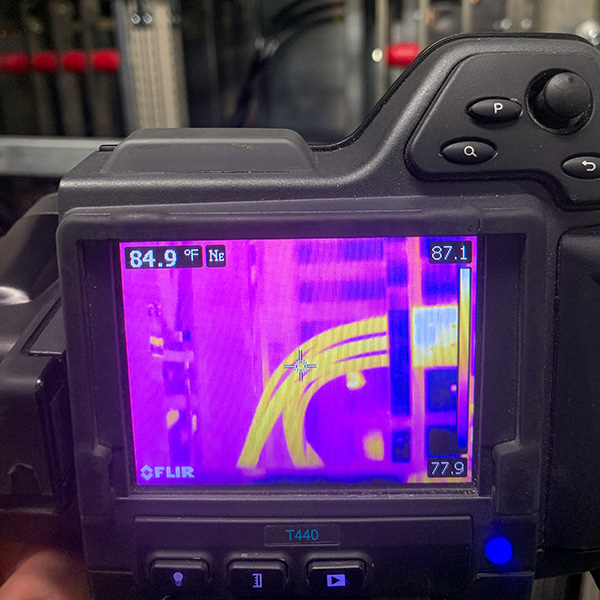
Overloaded circuits generate excessive heat. This happens when electrical conductors carry more current than they were designed to handle. The heat buildup can degrade insulation, damage components, and eventually lead to equipment failure.
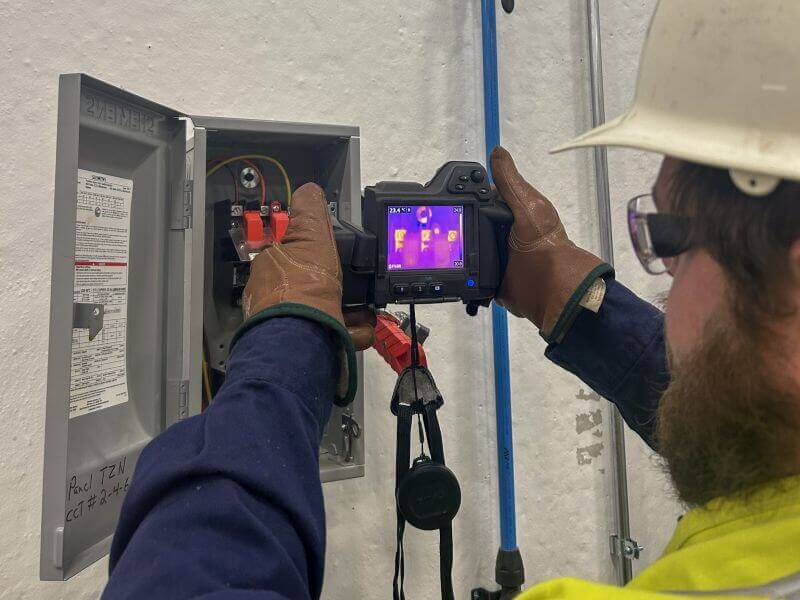
An IR electrical inspection uses a thermal imaging camera to scan energized circuits. This method helps identify heat patterns associated with overloaded circuits. Conductors, breakers, or connection points may appear significantly hotter than similar nearby components.
Early detection helps your maintenance team respond quickly. Loads can be rebalanced. Connections can be repaired. Components can be upgraded before damage occurs.
Maximizing Equipment Lifespan with Infrared Electrical Inspections
There’s a good reason for insurance providers to require infrared electrical inspections. They help identify developing problems early, so you can avoid larger and more expensive failures later.
Early detection allows maintenance teams to act quickly. They can correct loose connections, rebalance loads, or replace deteriorating components. These actions prevent overheating and protect insulation and electrical contacts. They also reduce stress on critical equipment and extend the life of electrical distribution systems.
If your insurance company requires inspections, we’ll make sure you stay in compliance and maintain coverage. Even when inspections are not required, you’ll receive the same detailed assessment and expert recommendations. Our goal is to keep your equipment running reliably for longer.

Ensure Safety with Infrared Electrical Inspections
Infrared electrical inspections help detect potential issues before they become costly problems. Quad Plus offers advanced infrared testing to identify overheating, faults, and system inefficiencies. Contact us today to schedule your inspection and keep your systems running safely.
Frequently Asked Questions
An infrared electrical inspection uses thermal imaging technology. It detects abnormal heat in energized electrical components. Excess heat often indicates loose connections, overloaded circuits, or failing equipment.
Most facilities conduct electrical infrared inspections annually as part of preventive maintenance. Some high-load or critical systems may require more frequent inspections.
Infrared inspections commonly identify loose connections and overloaded circuits. They also reveal failing breakers and deteriorating insulation.