
Switchgear Services and Solutions:
Testing, Inspection, Repair, and Preventive Maintenance
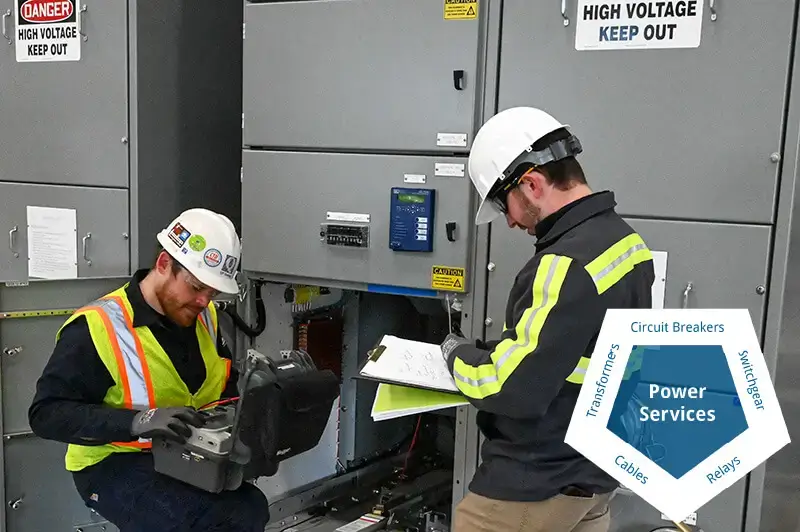
Switchgear is the backbone of any industrial power system. Keeping it in top condition is critical for safety and reliability.
Complete switchgear services are available for low-, medium-, and high-voltage systems, including switchgear maintenance, inspection, testing, and repair.
Not sure what your system needs? Tell us what you have and we will tell you what we would recommend.
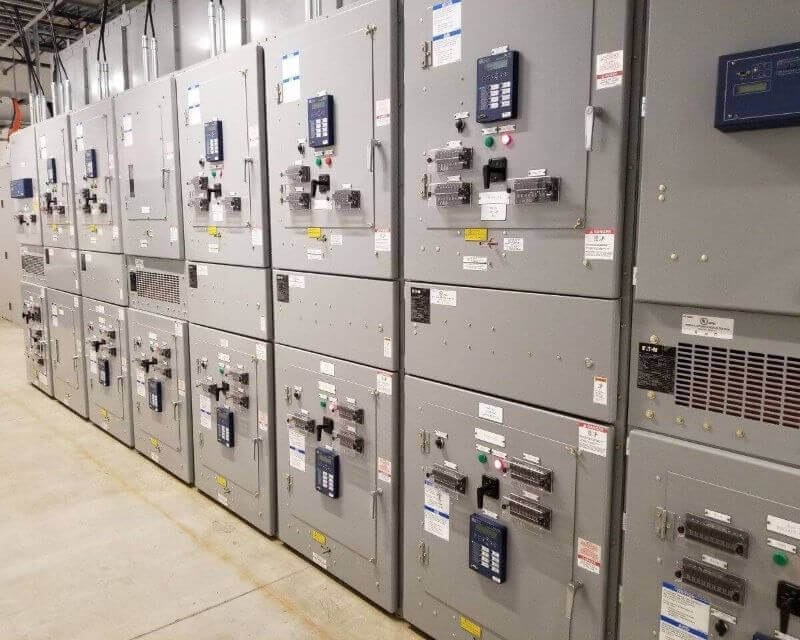
Comprehensive Switchgear Services for Industrial Power Systems
Our switchgear services cover full lifecycle support for industrial power systems.
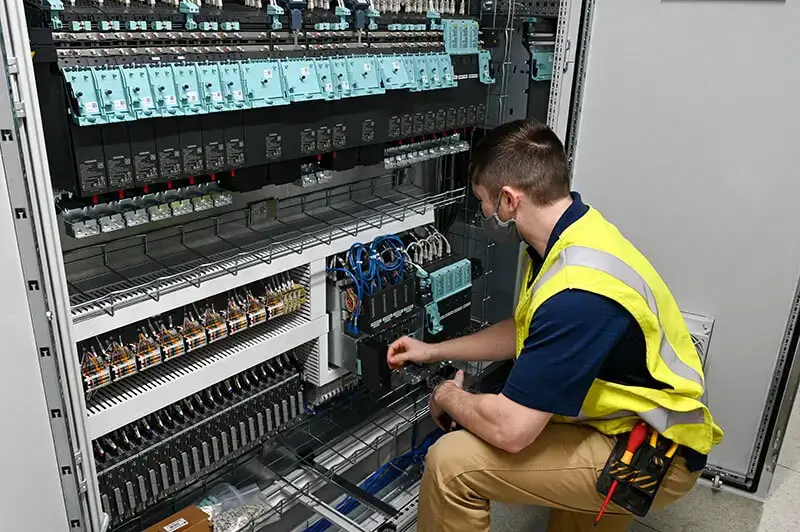
We begin with NETA-accredited switchgear testing and detailed diagnostics. This identifies issues such as misconfigured relays, connection issues, or outdated instrumentation. Field testing covers systems up to 345kV, well beyond the low- and medium-voltage range most regional providers work in.
For systems requiring intervention, we offer targeted maintenance, repairs, and retrofits. Our circuit breaker repair services are PEARL-certified, and we support both legacy and modern equipment.
Every service is backed by strict quality standards. OEM parts are always used where necessary. We provide detailed reporting to support compliance and long-term reliability.
Commissioning new switchgear is complex. Managing aging assets or responding to failures is no easier. Whichever situation you are in, our team delivers solutions built for industrial demands.
The Different Types of Switchgear Services We Provide
Specialized electrical switchgear services keep your systems safe, reliable, and compliant, whether you run an industrial plant, a commercial building, a data center, or a substation.
Key Benefits of Comprehensive Switchgear Testing and Inspection
Reliable switchgear doesn’t happen by chance. Regular switchgear services, such as testing and inspection, deliver measurable advantages. These benefits help keep your operations running at peak performance:
Comprehensive testing and inspection provide clear documentation to support audits and long-term asset planning.
Different Types of Electrical Switchgear
Each type of voltage switchgear is designed with specific insulation, switching, and protection mechanisms. These are tailored to the voltage level and application requirements. Switchgear selection depends on several factors, beginning with the electrical system’s voltage level. Power capacity, reliability requirements, and regulatory standards are also considered.
There are three different voltage types of switchgear:
In addition to voltage, switchgear types vary depending on the application and operating conditions. Some common types include:
- Air Insulated. AIS uses air as the primary insulation medium between conductors. They are primarily used for medium-voltage applications. This switchgear type is cost-effective and suitable for indoor installations where space is not a limitation.
- Gas Insulated. GIS enables more compact designs than AIS. Gas-insulated switchgear uses sulfur hexafluoride (SF6) as the insulating medium. Ideal for high-voltage applications and limited-space locations.
- Oil Insulated. Oil-insulated switchgear uses mineral oil as the insulating medium. It is a common choice in older installations and some legacy systems. Not widely used currently due to environmental concerns.
- Solid Insulated. Solid-insulated switchgear utilizes epoxy resin or porcelain as the insulation medium. It provides excellent insulation properties, reduces fire hazards, and requires minimal maintenance.
Other switchgear types include vacuum-insulated switchgear, hybrid switchgear, metal enclosed, and pad-mounted switchgear.
We specialize in keeping our clients up and running.

Get Expert Switchgear Services for Optimal Performance
Reliable switchgear services are essential for safety and efficiency. Our field teams serve industrial and commercial facilities across the Midwest, including Illinois, Indiana, and Ohio, with a circuit breaker shop in the Chicago metro. Working outside that area? Get in touch and we will tell you what we can cover.
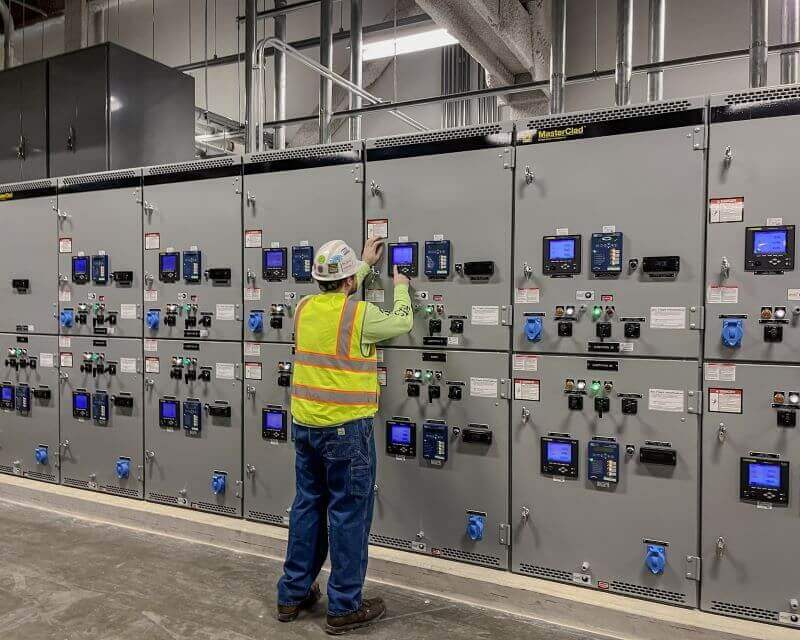
We provide maintenance and repair on equipment from most manufacturers, including Siemens, ABB, Eaton, Cutler-Hammer, Square D, Westinghouse, Allis-Chalmers, and General Electric, among others.







Frequently Asked Questions
Yes. For medium and high voltage switchgear, partial discharge testing can be included as part of the initial assessment to identify areas of concern before further testing begins.
Quad Plus services switchgear from most manufacturers, including Siemens, ABB, Eaton, Square D, Westinghouse, Allis-Chalmers, and GE, among others.
Arc flash studies assume equipment is performing as designed. If maintenance has lapsed, the conditions the study was based on may no longer be accurate. Labels should be reviewed by an engineering firm at least every five years, and current requirements call for labels to be displayed on equipment at all times.
Common findings include heavy dust accumulation, hardened grease that prevents switches from operating, and visible signs of partial discharge such as ash-like residue or cracking on insulation. In some cases, equipment can still be cleaned and serviced. In others, damage may already be severe enough that replacement becomes the more practical option.
Electricians can clean and visually inspect switchgear, which is valuable on its own. NETA-accredited technicians additionally test and service circuit breakers, switches, and protective devices — the components most likely to fail and most responsible for protecting downstream equipment — using standardized test procedures and acceptance criteria.
Most electrical testing requires the equipment to be de-energized, isolated, and grounded. Some diagnostic work, including partial discharge testing, can be performed without taking equipment offline. For planned maintenance, the team works around your outage schedule. Intervals follow the NETA base intervals above, adjusted to your equipment and program. For unplanned failures, the team rearranges schedules to respond immediately.
Professional electrical switchgear services include inspection, cleaning, and lubrication. They also include mechanical adjustments and electrical testing. Thermal imaging and verification of protective devices are part of the process. Depending on equipment condition, services may also include repairs, retrofits, or component replacement.
Most facilities follow NFPA 70B guidelines, which recommend switchgear inspections at least once per year. More detailed testing is recommended every 1-3 years, depending on load, environment, and criticality. High-demand or harsh operating conditions may require more frequent testing.
Common warning signs include overheating, frequent tripping, and unusual noises during operation. Difficulty operating breakers or switches, visible damage, and a burning smell are also clear warnings.
Technicians often uncover loose or corroded connections, insulation deterioration, and worn contacts. They may also find misaligned mechanisms and excessive heat from overloaded components. Outdated protective relays or trip units are also common.